
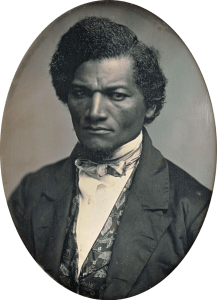
 At a VisitRochester meeting last week, Christine Ridarsky, the City Historian & Historical Services Consultant at the City of Rocheste , spoke about the City’s 2018 project to digitize the abolitionist writings of Frederick Douglass in commemoration of his 200th birthday. She spoke about how some of the collection was destroyed when his house in Rochester burned down, but her hopes that, in digitizing the current collection, some of the missing issues might surface and be restored.
In addition to being a prolific writer, Frederick Douglass was also the most-photographed man of his time. His significant legacy lives on in image and word, as well as in the collective memory of the community in which he spent 25 of the most active years of his life. Recently-found photos have added to that legacy.
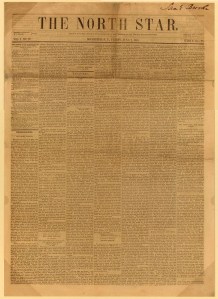 Across the footprint of time, man has attempted to leave his legacy etched on the walls of caves, written on papyrus, carved into churches, sculpted in marble, penned into diaries, books and letters, filmed on celluloid, painted onto canvas, and most recently, typed into computers.
There are more communications options today than ever in the past. With blogs, digital memes, websites, social media, high-definition camera phones, digital video creation, virtual reality, texting, cell phone photography and more, communication today is ubiquitous. Anyone who has a desire can share ideas, thoughts and visual images with others.
Yet I often wonder what percentage of this wealth of communication will live on. In 200 years, we will still have the scrolls and the photos, early books, sculptures and paintings, but will we still be able to access the writing on websites, in blogs and on kindles, the photos taken on digital cameras, and videos that were posted online?
Developing new technology is easy, but preserving our digital legacy is the true challenge for technology makers.
 Out on a Limb